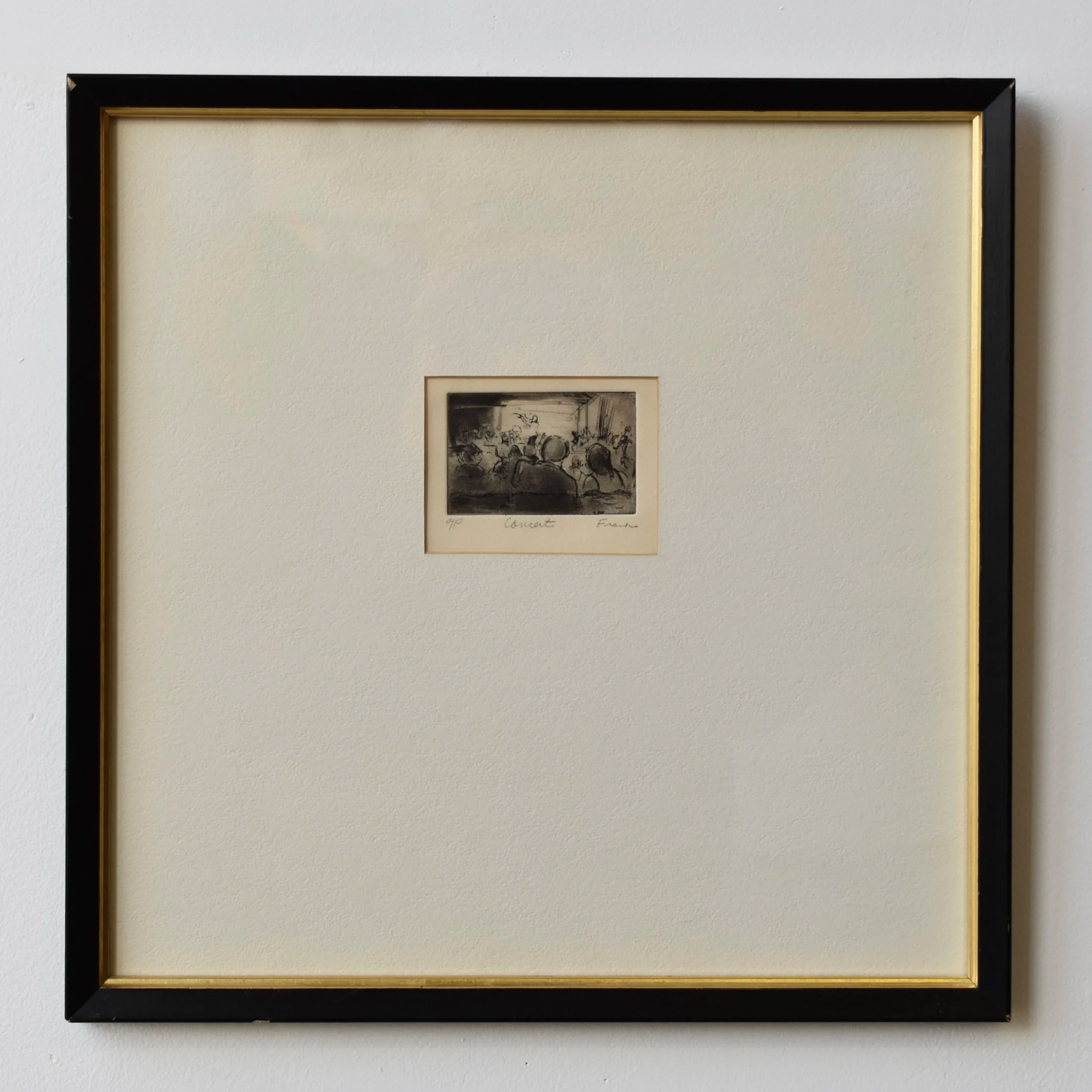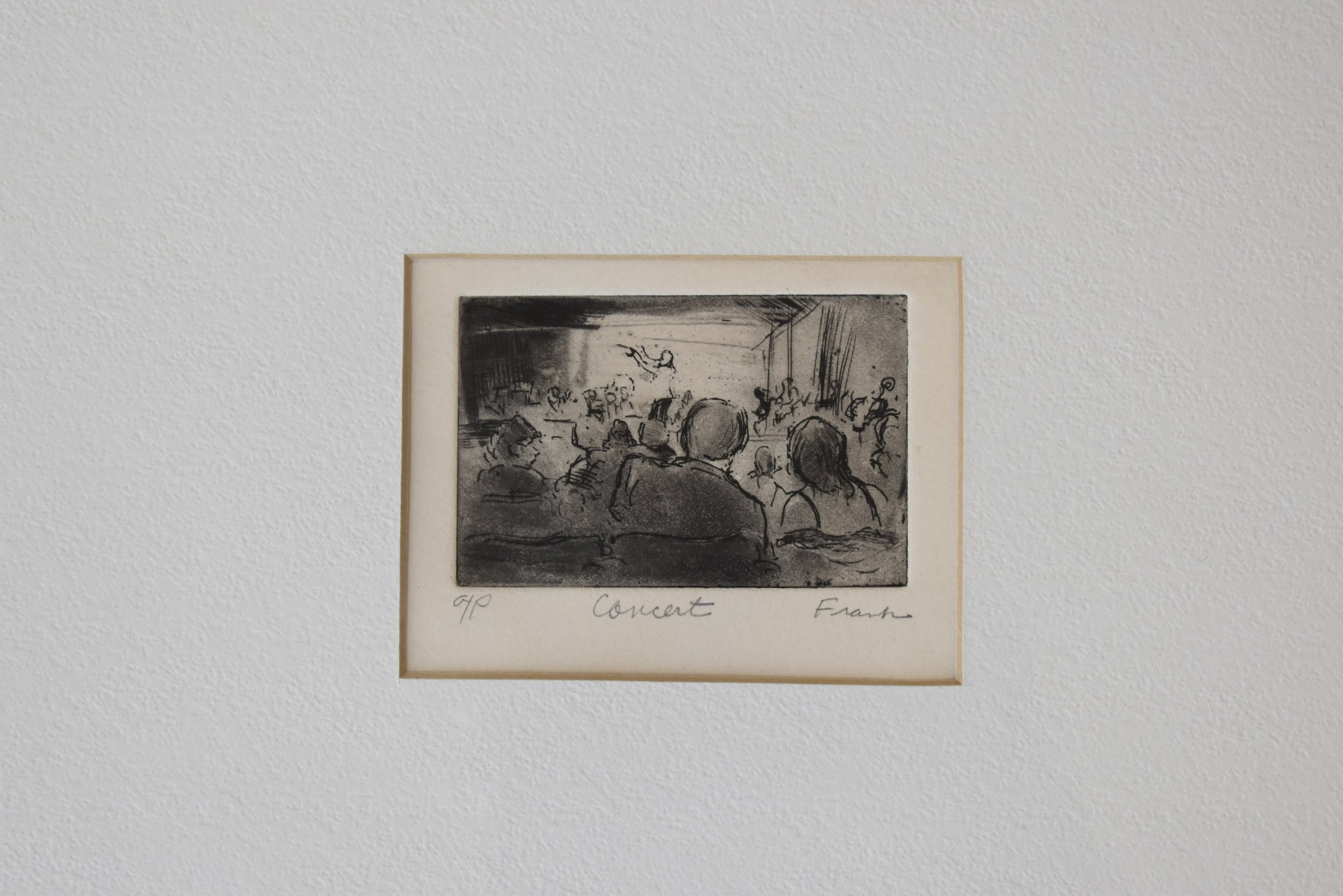


Vintage Street Scene Etching by Tanaka Ryohei, Circa 1980s

Vintage Street Scene Etching by Tanaka Ryohei, Circa 1980s
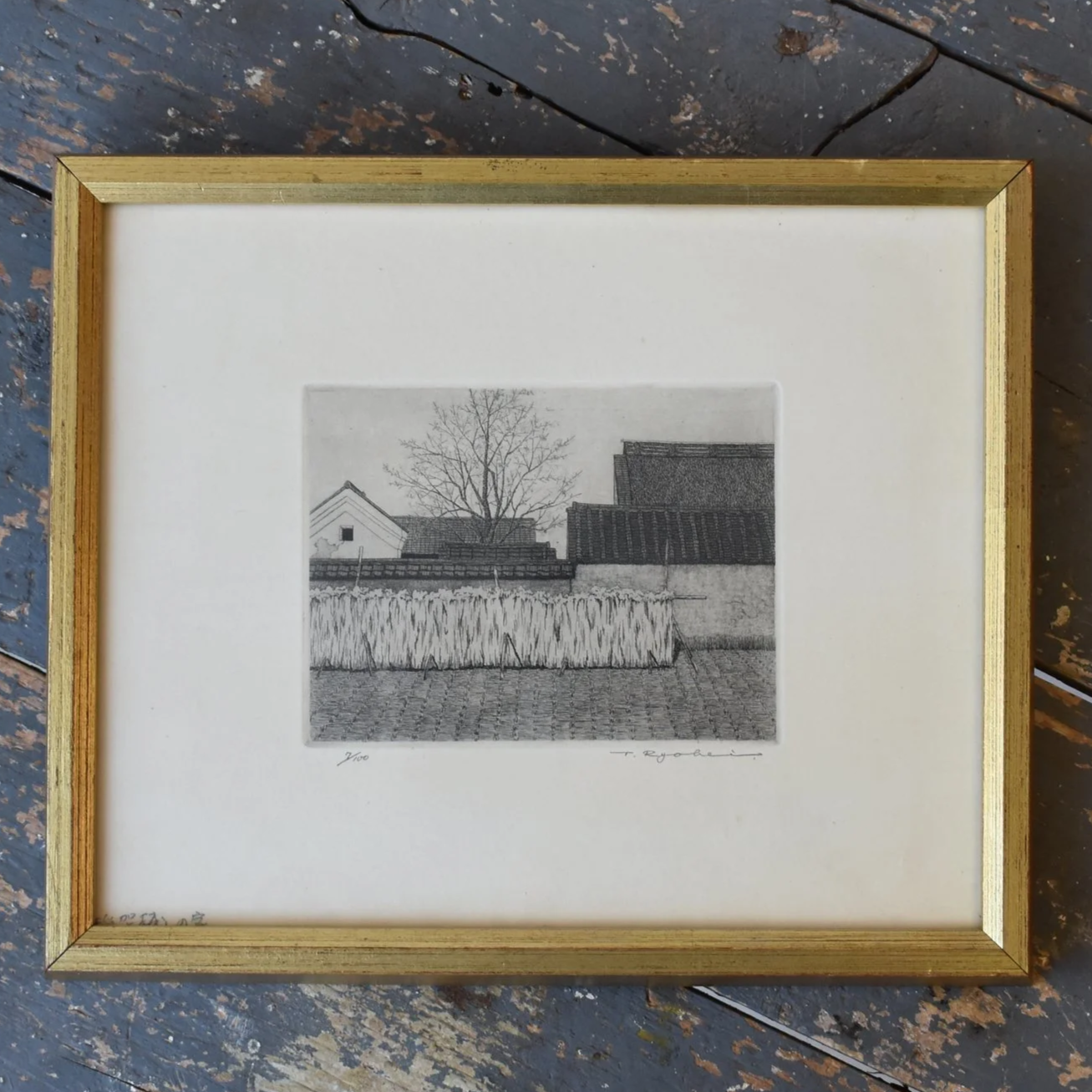
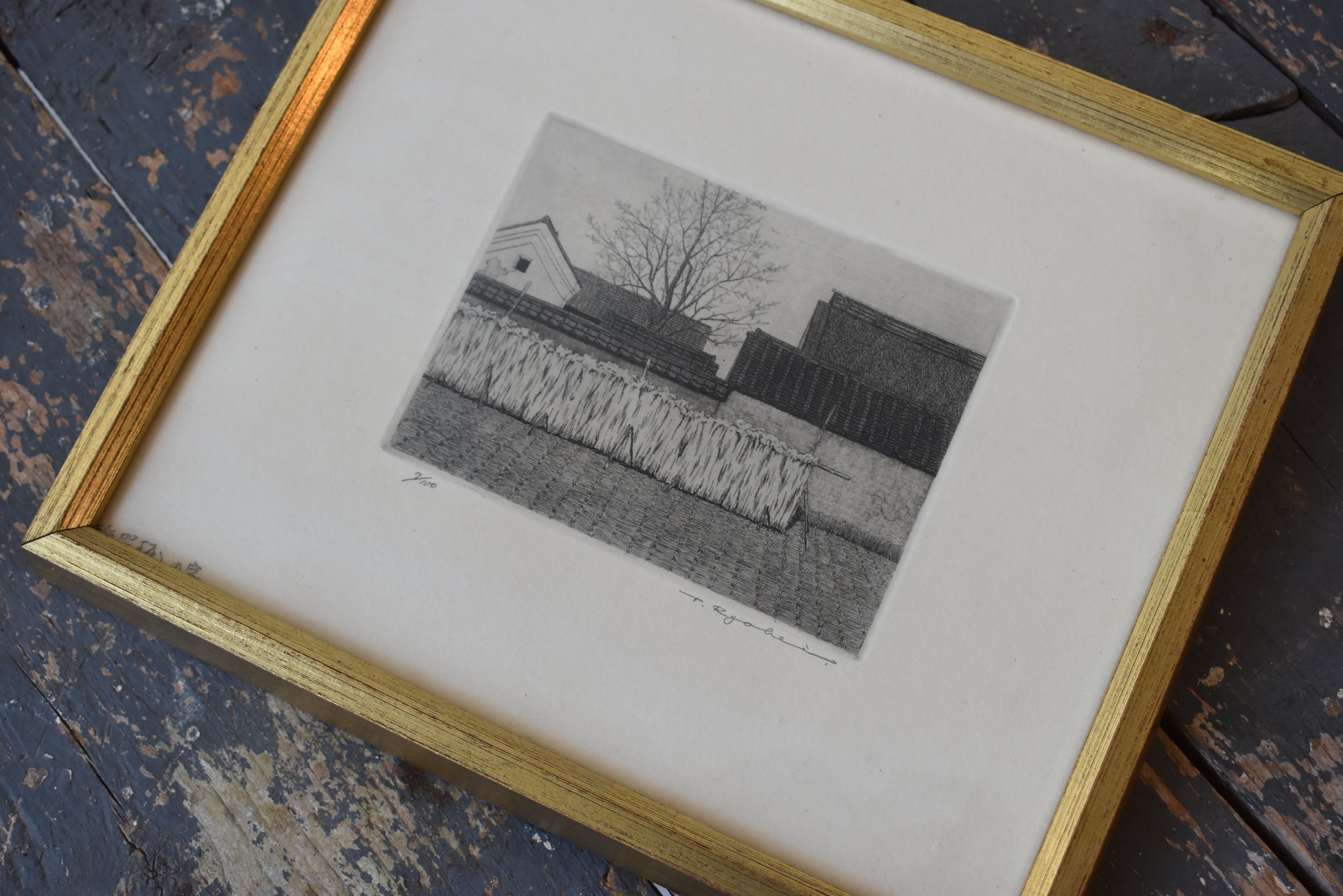
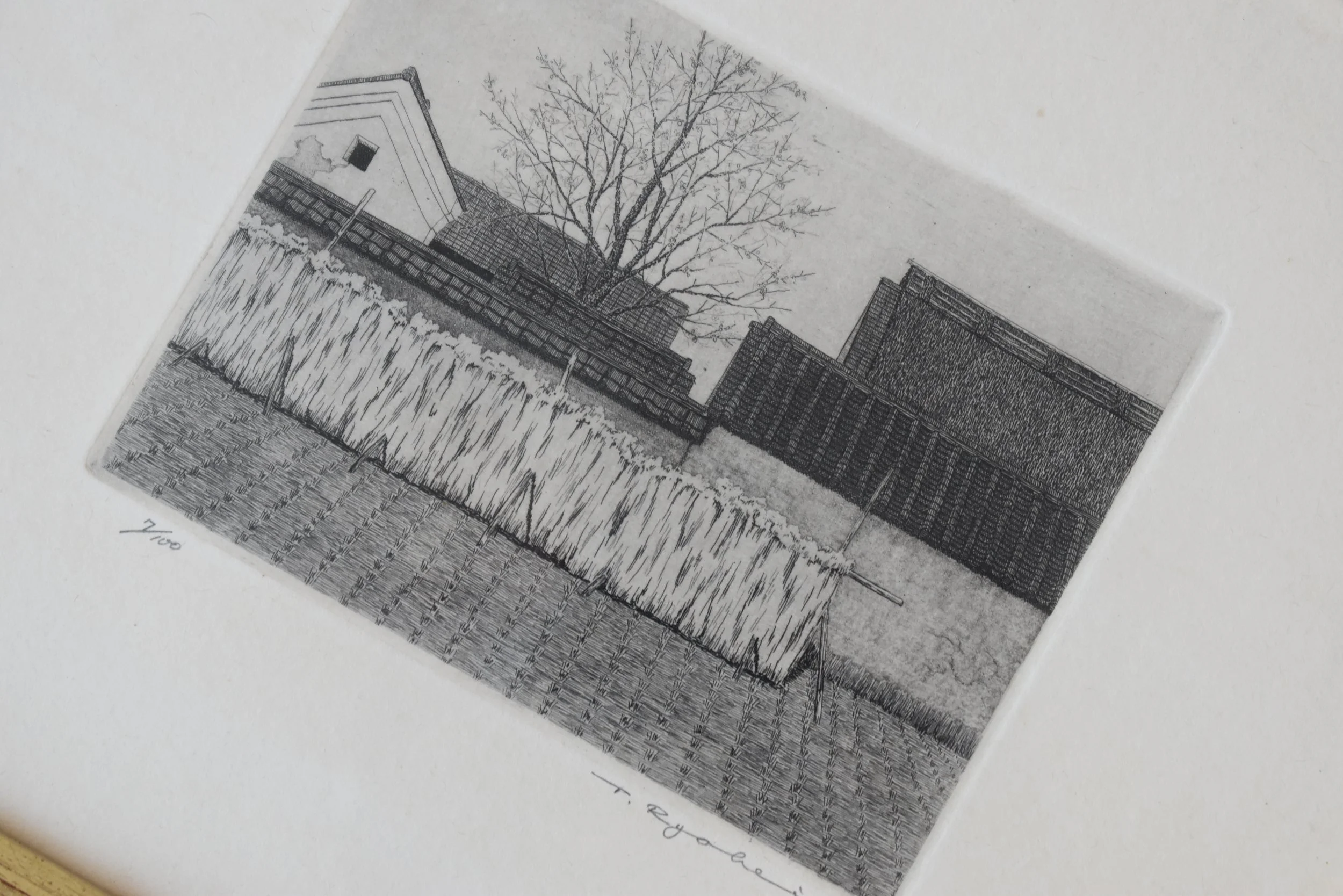
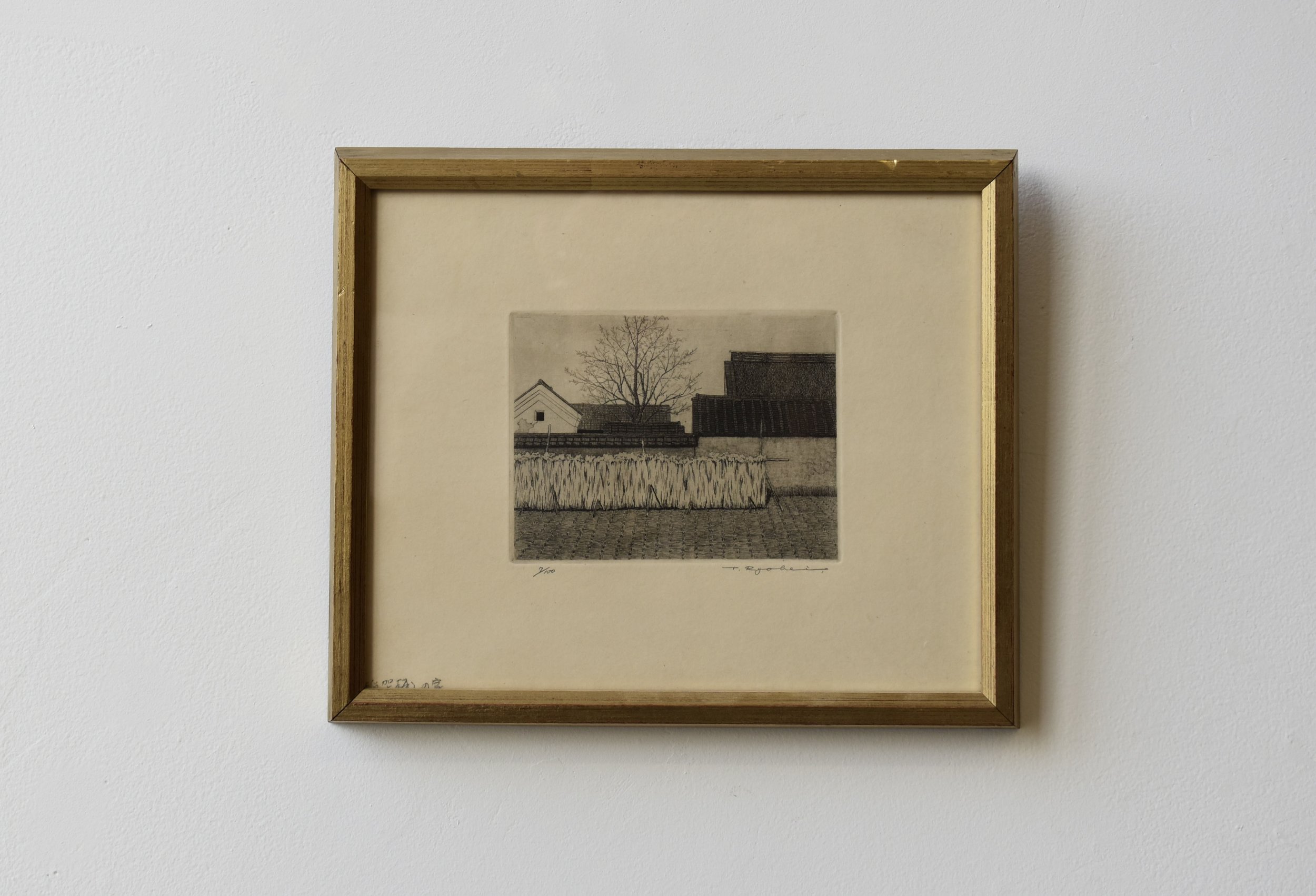
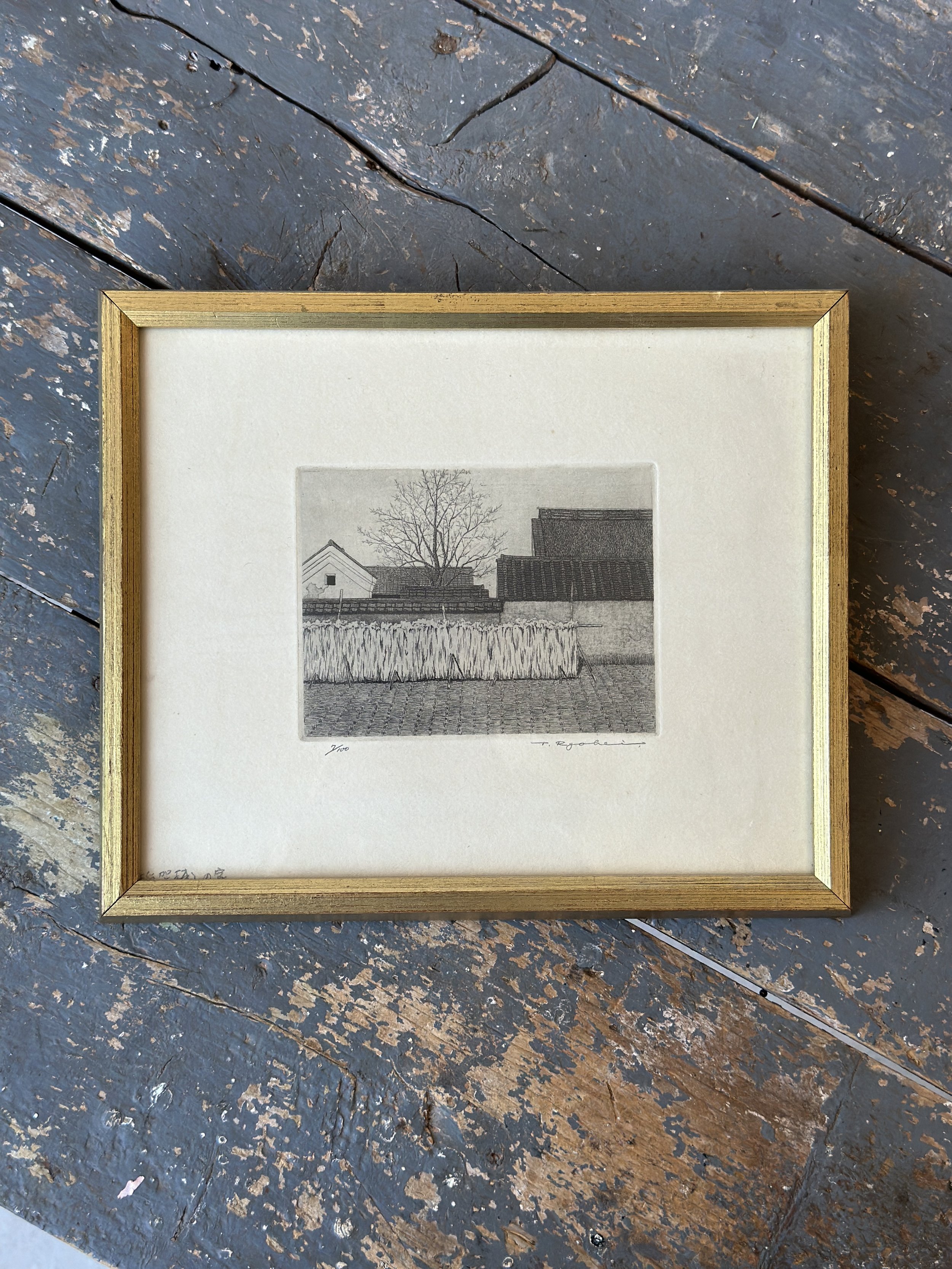
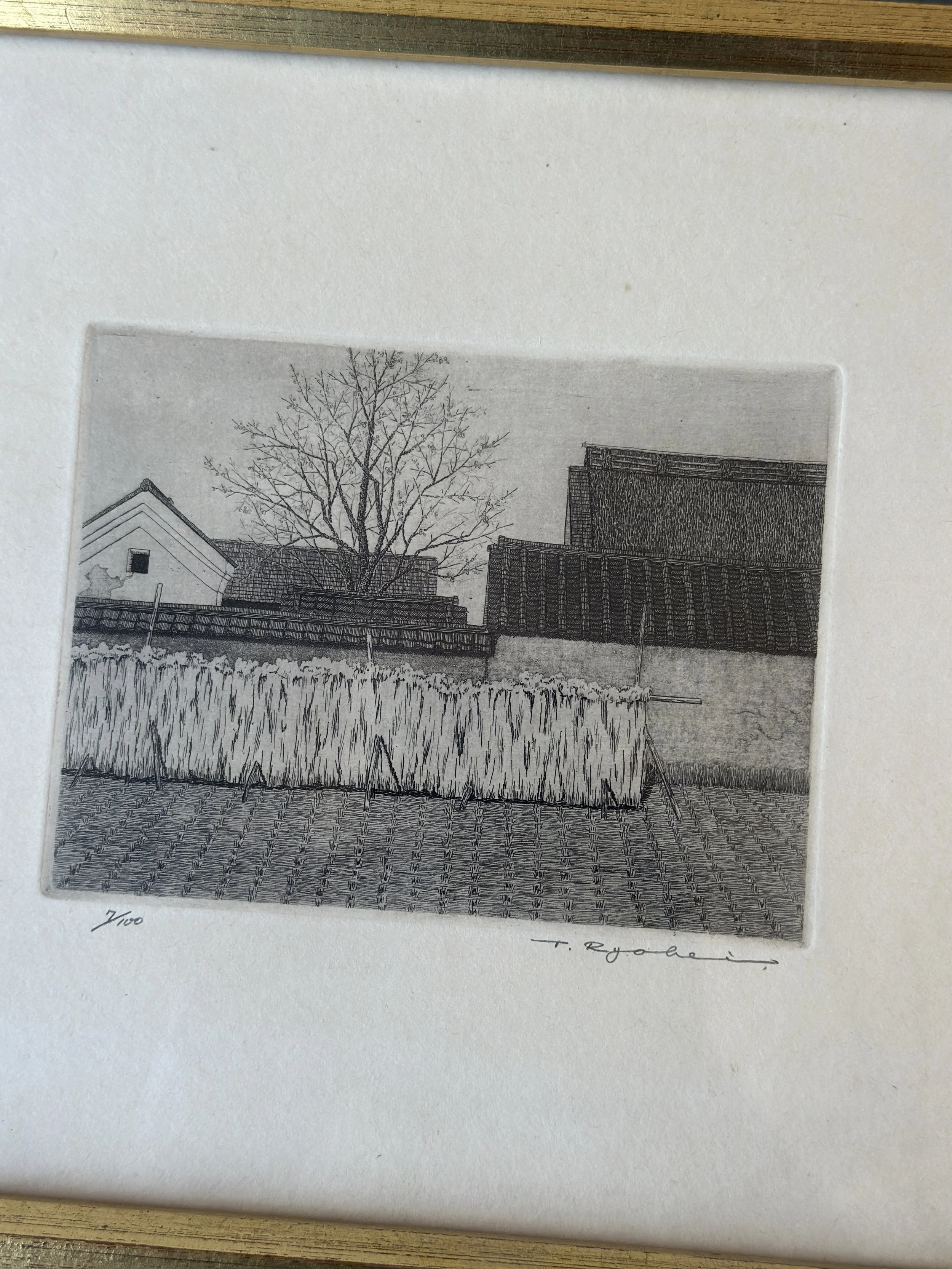
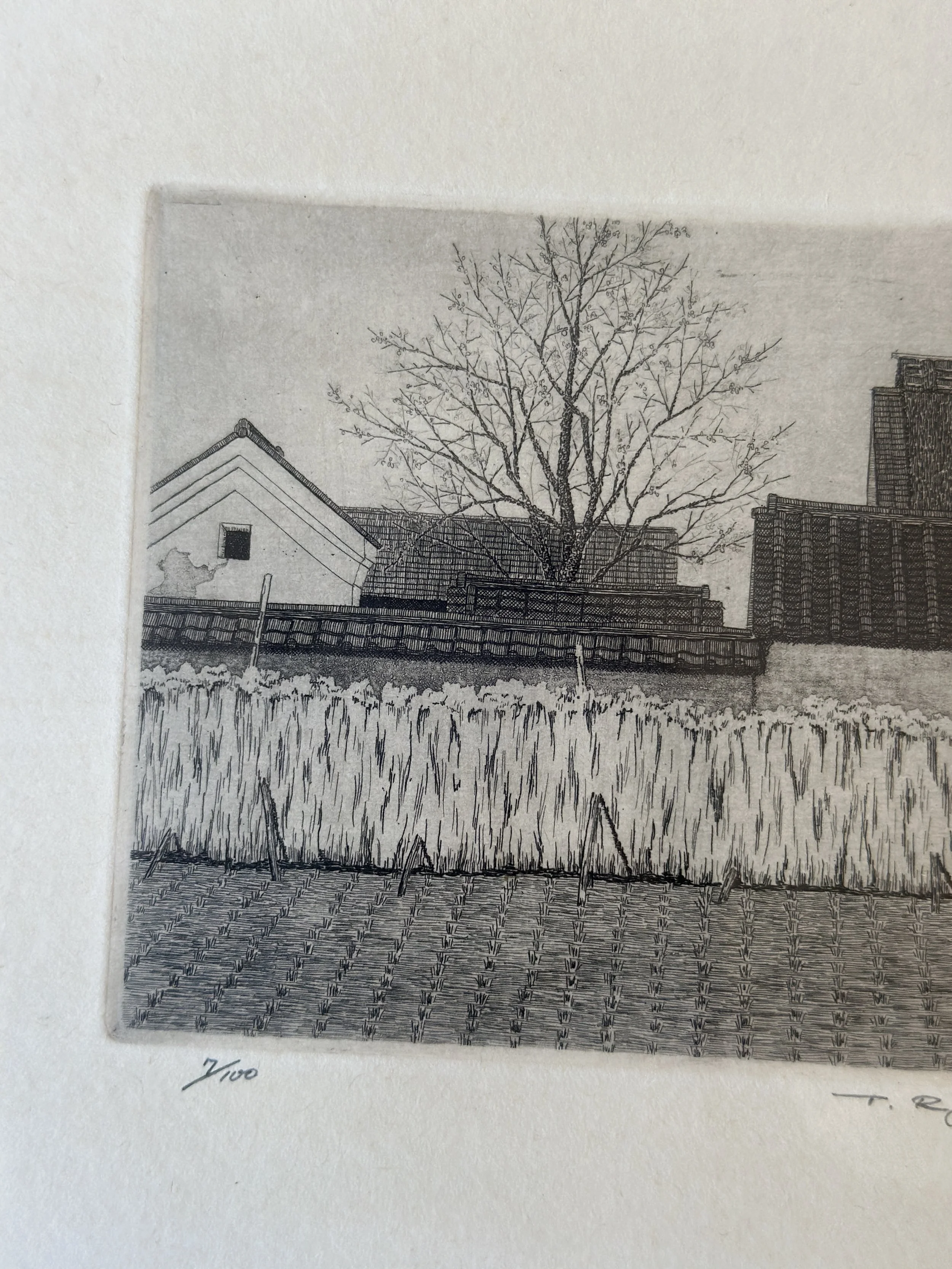
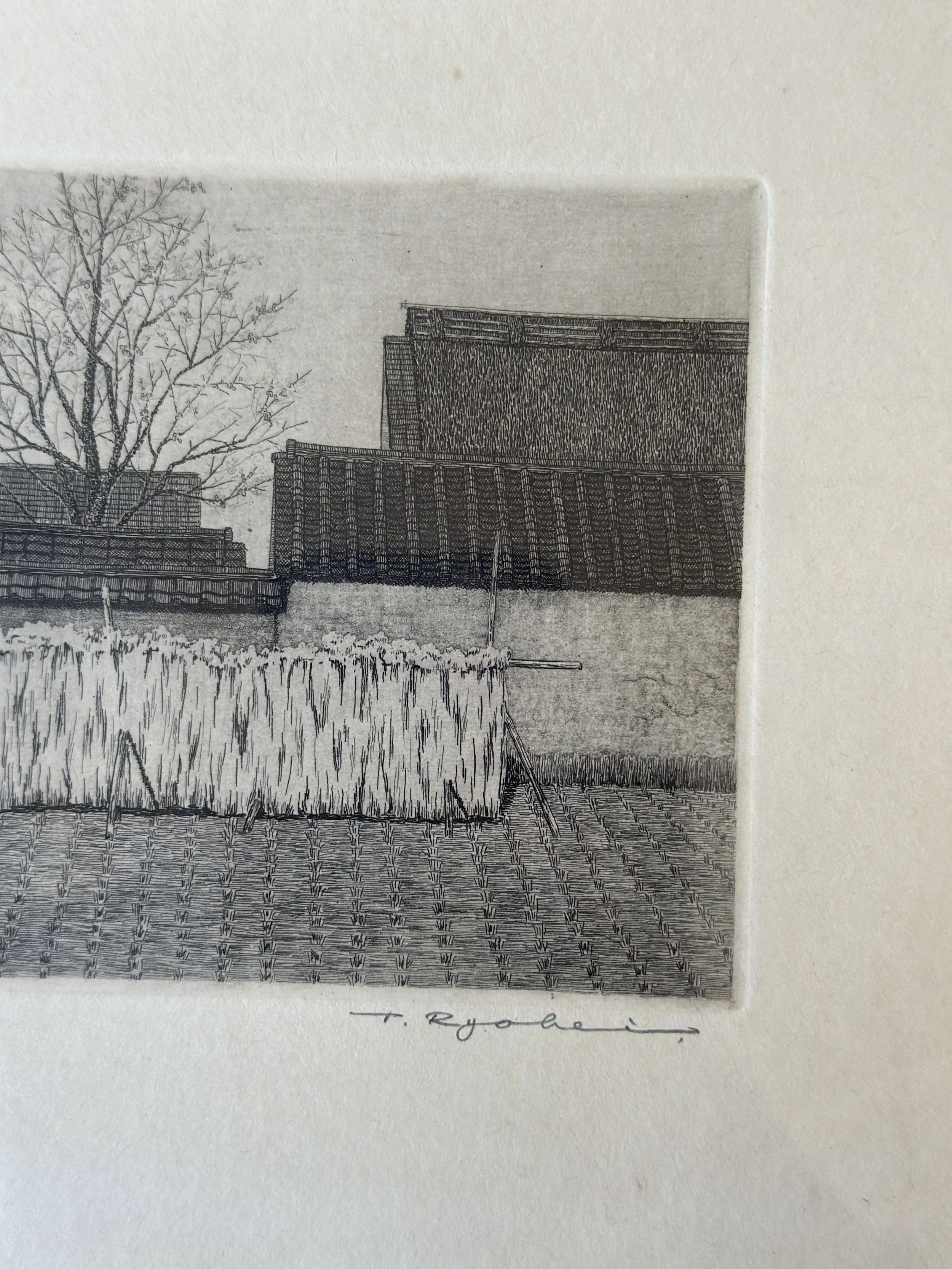
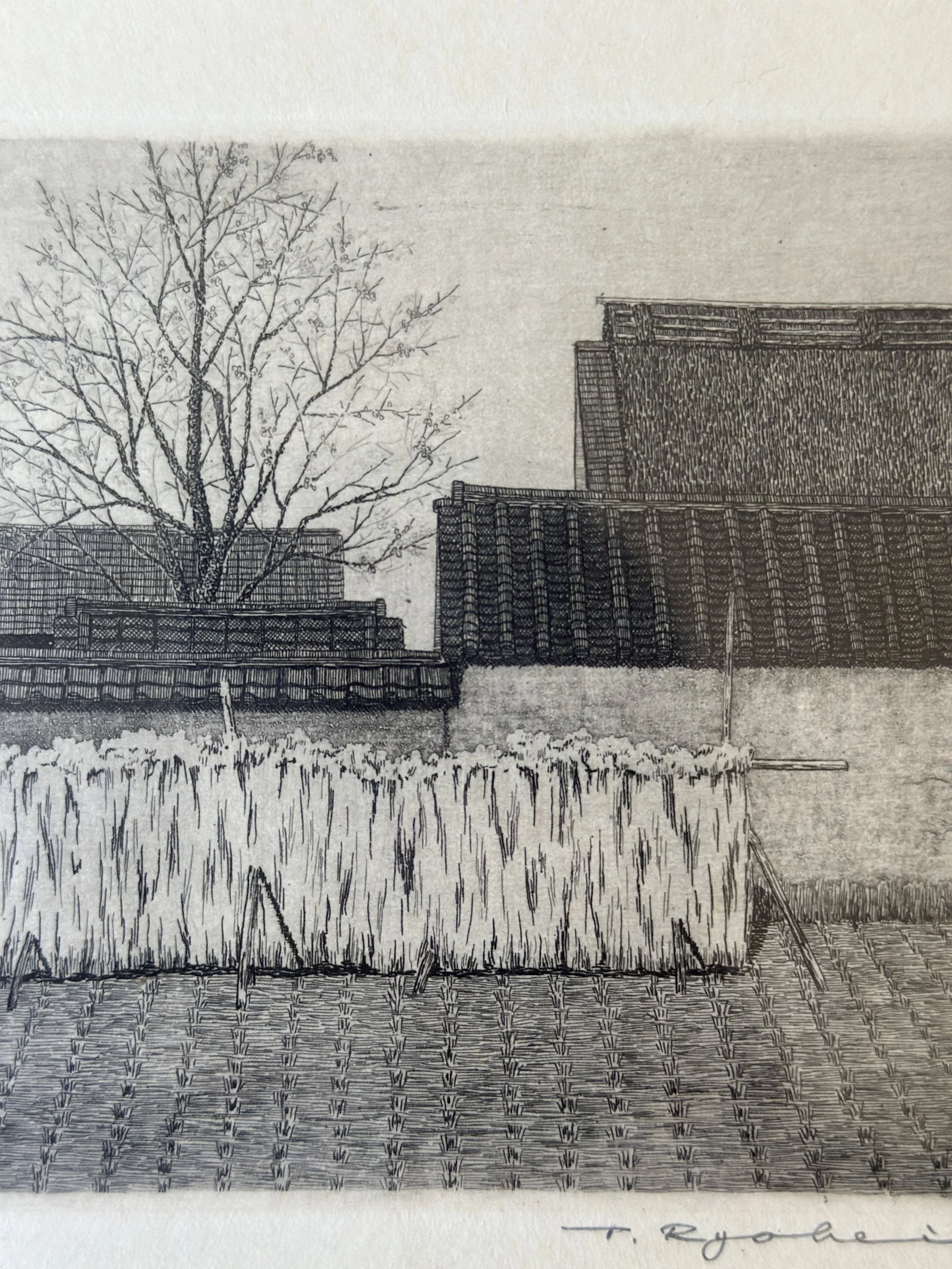
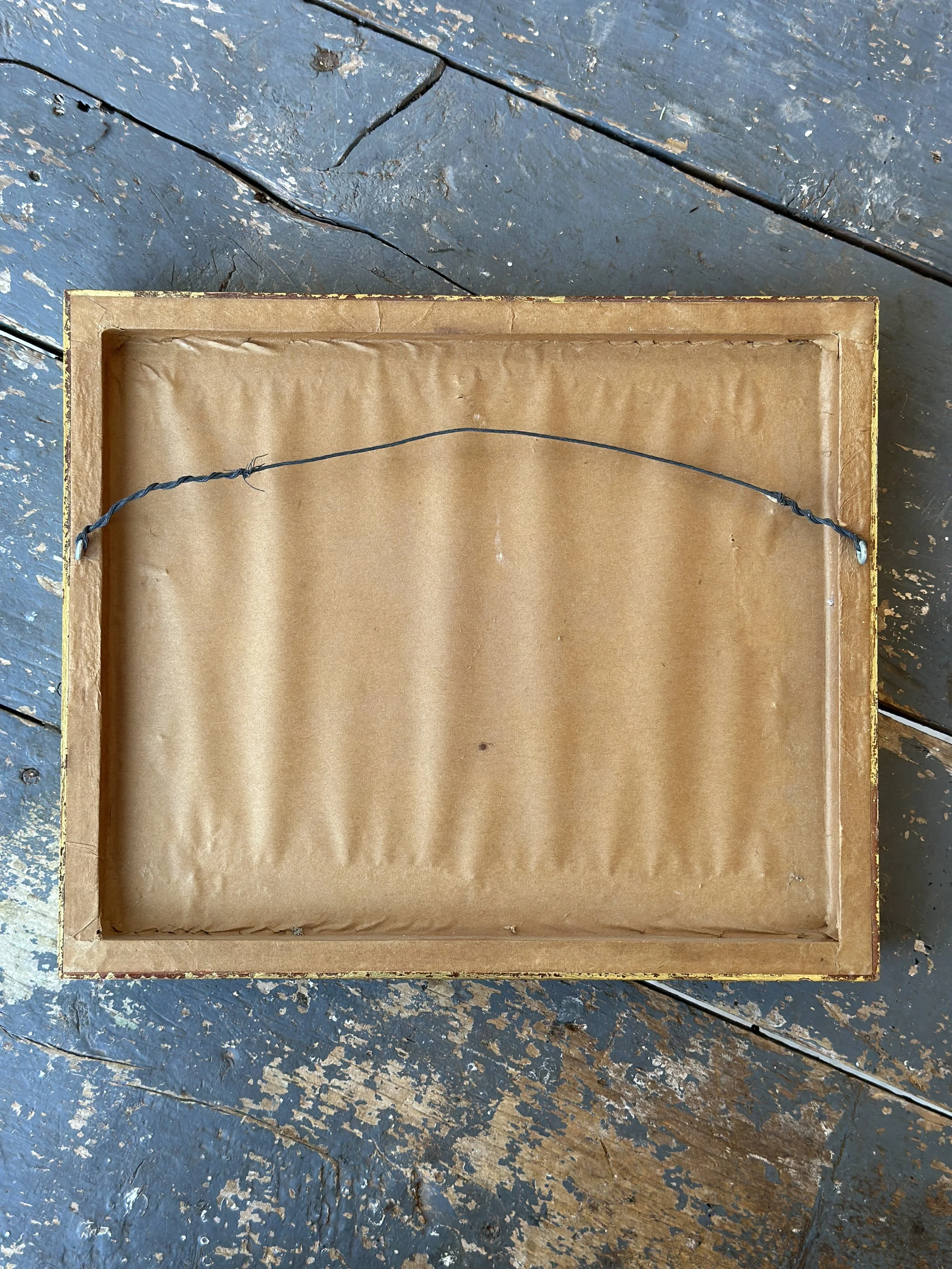
Vintage Street Scene Etching by Tanaka Ryohei, Circa 1980s. Black and white aquatint by Japanese artist, Tanaka Ryohei. The melancholic work centers a manicured landscape offset by a large, barren tree layered between farmhouses with thatched roofs. Numbered 7 from an edition of 100, signed in the lower right corner below the plate. Characters at the lower left in pencil likely reference the edition. Set within a gilt wood frame.
Condition: Excellent vintage condition, light surface finish variation on the frame commensurate with age and use
Specs: 10 9/16" W | 9 1/8' H | 1 3/8" FRAME DEPTH INCLUDING HANGING HARDWARE | 5" W OF ARTWORK | 4" H OF ARTWORK
Artist’s bio, courtesy of The Museum of East Asian Art (Museum für Ostasiatische Kunst Köln) :
“Tanaka Ryohei (1933–2019) was a Japanese printmaker who masterfully employed the Western intaglio technique of etching (Japanese: doban). His predominantly monochromatic prints depict Japan’s traditional thatched-roof farmhouses, temples, and landscapes with poetic beauty and a gentle melancholy. The textures of thatch, wood, stone, and other natural materials are rendered with remarkable precision and perfection.
Tanaka’s career spanned over fifty years, during which he created more than 770 unique etchings. The total number of prints exceeds 100,000, all of which he personally published. This remarkable output makes him one of the most prolific artists of his generation.
In the context of Japanese printmaking, where colorful woodblock prints traditionally dominate, Tanaka’s etchings hold a unique position. Like the artists of the “creative” sōsaku-hanga movement, who emphasized the individual artistic vision of the artist, Tanaka took on every step of the printmaking process, from designing and preparing the copper plate to printing the final work. Thematically, however, his works are closer to the nostalgic and romantic woodblock prints of the shin-hanga artists, yet they demand close observation and a meditative engagement with the image.”